Get 10% off on first booking! Use code WELCOME10

Surf spots in Taghazout: stories, names and big days

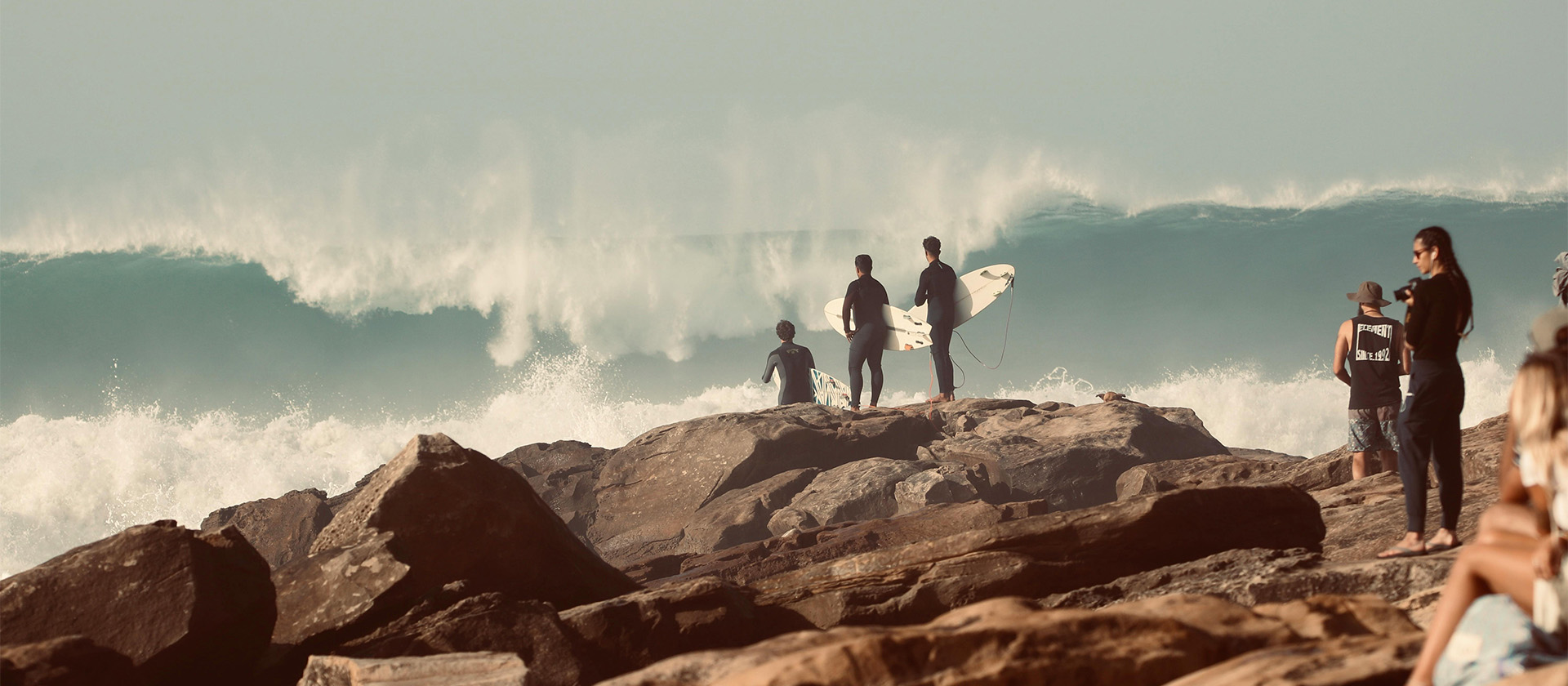
Around Taghazout, a few names always come up when people talk about waves: Anchor Point, Hash Point, Panoramas, Killer Point, Banana Point… Behind each name there’s not only a type of wave and a level, but also small stories, local legends and some memorable sessions.
Anchor Point: the emblematic right-hander
Anchor Point (also called “La Pointe des Ancres”) is the most famous spot in Taghazout and one of the best‑known right‑handers in Morocco. It’s a long point break that peels in several sections and can work from fun 1 m walls up to solid winter swells well overhead, without really maxing out.
The name is linked to anchors and fishing gear that used to be in this rocky zone in front of the point, which is why older locals sometimes still refer to it as “Pointe des Ancres” before the English “Anchor Point” stuck among surfers. On the biggest winter swells, locals say that one single wave can, in theory, connect almost all the way towards the village, with rides of several hundred metres when every section lines up.
This is where the Pro Taghazout Bay is held. In 2025, French surfer Jorgann Couzinet won the QS 3000 here with a huge total heat score of 19.17/20, just ahead of Moroccan star Ramzi Boukhiam on 19.00/20. That edition was surfed in classic winter Anchor Point conditions, with long, powerful rights in the 6–8 ft range, and is already remembered as one of the best competitive weeks the spot has seen.
Hash Point: the village wave
Hash Point sits right in front of the village, just below the cafés and terraces. It’s a softer, less powerful right‑hander than Anchor Point, often a bit fickle, but very practical to surf around mid to high tide.
The name “Hash Point” comes from Taghazout’s hippie years in the 70s and 80s, when travellers and locals used to hang out and smoke hash on this part of the shore. The nickname stayed, and the spot became simply “Hash Point” for everyone. Today it’s still very much the village wave: you’ll see locals, kids, travellers and longboarders sharing the line‑up on smaller days, and it’s a common place for first green waves or easy sunset sessions.
Panoramas: the progression-friendly spot
Just south of the village, Panoramas is a mix between a beach break and a point break, with a sandy bottom and some reef sections. It works on most tides, starts breaking with relatively small swells, and can handle up to around 2–2.5 m before becoming too full or closing out.
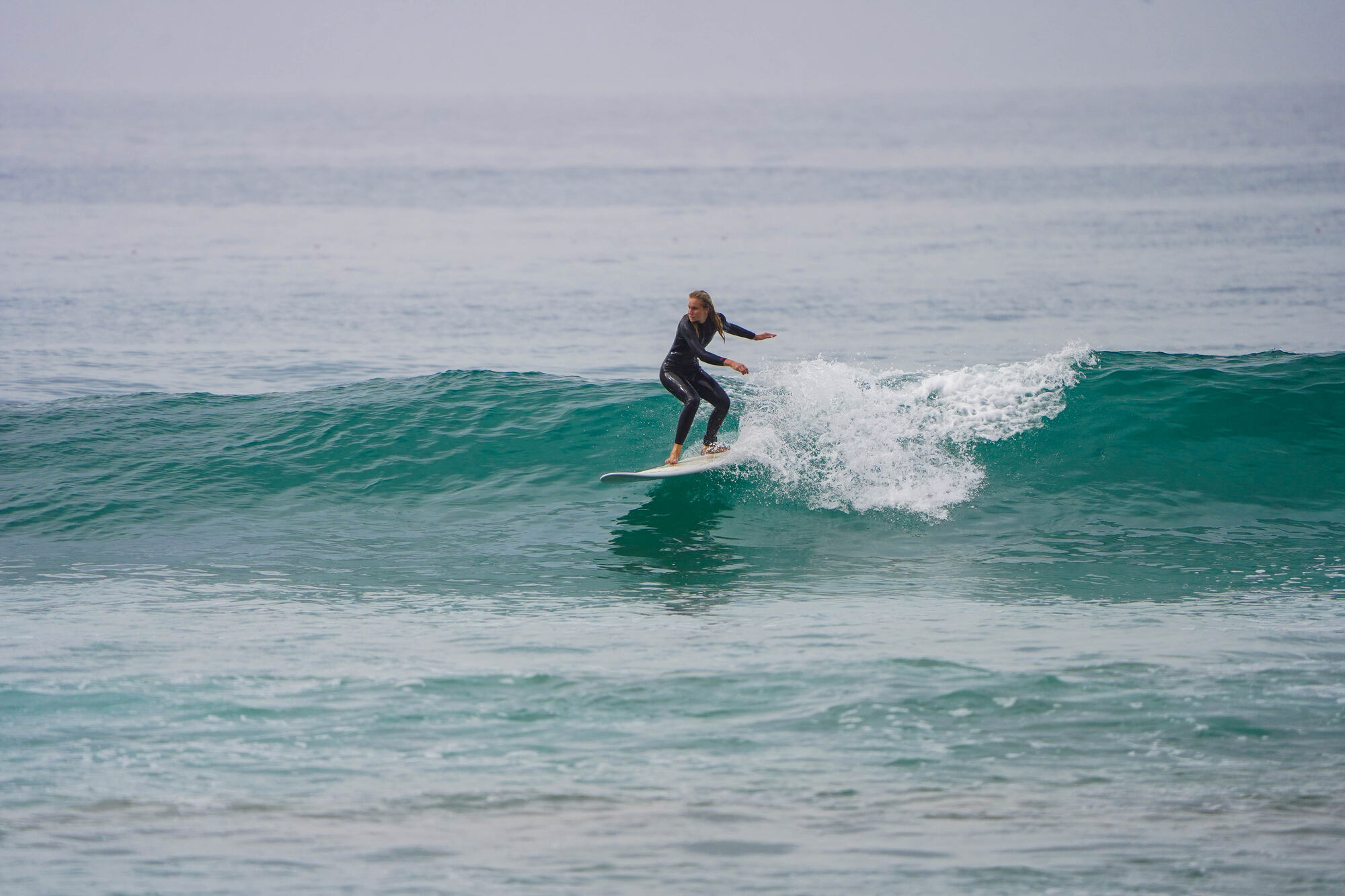
It’s called “Panoramas” simply because of the wide open view over the bay and coastline from the beach and the hill behind. This is one of the key spots for surfers who are past the pure beginner stage and want to progress: there’s plenty of room to paddle out, lots of take‑off zones and long, forgiving rights that let you work on stance, timing and first turns without getting smashed by heavy lips every set.
Killer Point: the swell magnet with a story
Killer Point (often called “Killers”) lies a bit further north of Taghazout and is one of the heaviest and most impressive waves in the area. It’s a powerful right‑hand point that picks up a lot of swell and is often described as a real “swell magnet”.
The name comes from killer whales (orcas) that have been seen passing in this zone during migrations. Surfers and fishermen used to spot them from the cliffs, and the place ended up being called “Killer Point” in reference to the animals, not because the wave is “killer” in a morbid way. The paddle‑out can be long from the beach, or done via a rocky jump‑off when the tide and conditions allow, which naturally filters the crowd to more motivated, experienced surfers. On big winter swells, Killers can produce long, powerful walls that attract both advanced surfers and photographers watching from the headland.
Banana Point: mellow, long rights
Banana Point lies further south, near the area known as “Banana Village” because of the banana plantations and fruit stalls along the road. The spot simply took its name from this local landmark.
The wave is a long, relatively mellow right‑hander with an easy take‑off and a shoulder that doesn’t shut down too quickly. It’s popular with surf schools and intermediate surfers, but can also be really fun for longboarders and shortboarders when the swell is clean. On days when Anchor Point or Killers are too big or too heavy, Banana Point is often the go‑to option for those who still want quality waves but in a more forgiving setting.
Sessions that shaped the local surf history
Not every session is written down, but some winters definitely stand out in people’s memories. Big February swells have sent serious lines into Anchor Point, with surfers riding guns and pushing the limits, and photos and videos circulating widely online afterwards. The 2025 Pro Taghazout Bay is another reference moment: high‑level surfing, almost perfect scores and classic lines wrapping around the point for the final.
Those days help build the reputation of Taghazout’s spots: most of the year they can be accessible and welcoming, but when the North Atlantic really turns on, they show why they’re talked about as some of the best right‑hand points in the region.
Conclusion
From orca stories at Killer Point and old fishing anchors at Anchor, to hippie days at Hash Point and modern WSL finals in long winter walls, each Taghazout spot has its own personality and history. At Taghazout Life, we use that local knowledge to offer surf guiding that matches your level, takes you to the right spot at the right time, and lets you experience these waves where the stories are still being written.